Your Trip Story
Steam hangs in the winter air outside a neighborhood sento, drifting past vending machines and bare gingko branches. Somewhere a delivery bike whines past, tires hissing on damp asphalt. December in Tokyo feels like the city exhaling: markets still humming, but the edges softened by cold, breath visible as you wrap chilled fingers around a hot can of coffee from a machine that glows like a tiny altar. This is the Tokyo you’re here for—not the checklist, but the in‑between moments. Over four slow days, this itinerary moves like a local’s week. Mornings belong to markets and shrines and parks: incense at Sensō‑ji, the ordered calm of Shinjuku Gyoen, the soft clatter of Kappabashi’s kitchenware shops where chefs and home cooks hunt for tools. Afternoons drift through the neighborhoods that Time Out and Lonely Planet keep circling—Shimokitazawa, Koenji, Asakusa—not as “cool districts,” but as living rooms for the city: thrift racks sliding on metal rails, matcha lessons above the street, knife galleries where the staff talk steel like wine. Evenings tilt toward low light and condensation on izakaya windows. You eat heavy-metal curry in Koenji while Slayer hums from the speakers, sip sake over glass floors in Koenji’s Sake bar KoKoN, and end nights in places that feel more like living rooms than “nightlife spots.” The days are intentionally roomy: enough time to linger over coffee, to walk between stations instead of changing lines, to notice the way Tokyoites move—quiet, punctual, always leaving space. By the time you leave, Tokyo stops feeling like a maze of train maps and becomes a loop of textures: warm lacquered chopsticks, cold shrine gravel under your boots, the dry heat of a sento, the soft weight of a thrifted coat. You carry home more than photos—knife steel that will outlive you, a mended kintsugi cup, a mental map of neighborhoods that now feel like your own small corners of this enormous city.
The Vibe
- Steam-soaked
- Market-led
- Neighborhood-intimate
Local Tips
- 01Trains run like a metronome here—locals treat punctuality as basic respect. If a meet-up is at 10:00, arrive by 9:55.
- 02On trains and in small bars, keep your voice low and your phone on silent; Tokyo’s social contract is built on not intruding on other people’s space.
- 03Carry a small tote and some cash—many neighborhood shops and markets still prefer coins and notes, especially around Asakusa and Koenji.
The Research
Before you go to Tokyo
Neighborhoods
For a unique experience, explore Shimokitazawa, known for its vintage shops and vibrant arts scene. This neighborhood is a favorite among locals and offers a laid-back atmosphere perfect for discovering indie cafes and live music venues.
Events
If you're visiting Tokyo in December 2025, don't miss the Chichibu Night Festival, one of Japan's 'big three' float festivals, celebrated for over 350 years. This spectacular event features beautifully decorated floats and a lively atmosphere, making it a must-see.
Food Scene
Dive into Tokyo's culinary delights with a guided tour of Tsukiji Market, where you can taste fresh seafood and learn about local ingredients. Insider tips from local guides will enhance your experience, ensuring you discover hidden gems and authentic flavors.
Where to Stay
Your Basecamp
Select your home base in Tokyo, Japan — this anchors your journey and appears in the navigation above.
The Splurge
$$$$Where discerning travelers stay

Aman Tokyo
Aman Tokyo floats above the city in Otemachi, all stone, glass, and shadow. The lobby feels like a cathedral to minimalism—soaring ceilings, dark pools reflecting soft light, and the distant glow of the city through floor-to-ceiling windows. The air is perfumed just enough to notice, and footsteps fall quietly on the smooth stone floors.
Try: Book a slot in the spa’s onsen-style baths and linger by the pool with its cinematic city views.
The Vibe
$$$Design-forward stays with character

Boutique Sauna ARCH
Boutique Sauna ARCH in Shinjuku is compact but obsessively designed—dark tiles, warm wood, and a sauna that feels almost Scandinavian in its care. The air in the heat rooms is dry and intense, while the cool-down spaces are dim and hushed. There’s a faint scent of cedar and clean cotton from the provided towels.
Try: Do at least three full sauna–cold rinse cycles and spend a few minutes in the relaxation area after each.
The Steal
$$Smart stays, prime locations

The Knot Tokyo Shinjuku
The Knot Tokyo Shinjuku overlooks Shinjuku Central Park, with a lobby that doubles as a casual hangout—long communal tables, a bakery scenting the air with butter and yeast, and floor-to-ceiling windows. Rooms are simple and compact, but the public spaces are where the hotel really lives.
Try: Grab a pastry and coffee from the in-house bakery and walk across to the park for a simple breakfast.
Day by Day
The Itinerary

Culture
Incense, Steel & Steam: Asakusa and Kappabashi in Slow Motion
Cold air bites your cheeks as you step out into Asakusa, the sky a pale winter blue and the smell of roasting sweet potatoes drifting from a street cart. The day begins quietly with coffee and beans at Mamekokoro Asakusa, the hiss of the espresso machine cutting through the soft chatter of locals warming up over lattes. From there, you move toward the deep red of Sensō-ji and the lantern at Kaminari mon, trading train noise for the muffled thud of footsteps on temple stone and the dry sweetness of incense smoke. Lunch is a simple, warming stop at Kinryu, where steam from hot bowls fogs the windows and your glasses, and chopsticks click against ceramic. The afternoon shifts to Kappabashi’s utilitarian beauty: aisles of knives at Seisuke Knife - Kappabashi and the luxury upstairs calm of Kappabashi Knife Gallery 2F, plus an afternoon spent learning to cut soba with a blade as wide as your forearm. Metal, wood, and whetstone textures dominate; the soundscape is the ring of steel on board and quiet concentration. Evening folds back into Asakusa’s lantern-lit streets for yakitori and sake at Izakaya Banraisyuten, before you slip into Yamaka Sakaba, where the clink of glasses and low radio music carry you toward the night. Tomorrow trades temple bells for thrift store hangers and guitar feedback in Koenji.
Mamekokoro Asakusa
Mamekokoro Asakusa
Mamekokoro Asakusa is compact and warm, with the hiss of steaming milk and the slow drip of hand-brewed coffee setting the pace. Light filters in through the front windows, catching the crema on lattes and the gentle swirl of foam art. There’s a toasty aroma in the air—dark roast coffee with a hint of caramel—and the occasional clink of ceramic on wood.
Mamekokoro Asakusa
From the café, it’s a 10-minute walk through Asakusa’s backstreets to the temple grounds of Sensō-ji.

Sensō-ji
Sensō-ji
Sensō-ji is Tokyo’s oldest temple, a complex of vermilion buildings, lanterns, and incense burners that anchor Asakusa. The air is thick with the smell of incense and street food drifting in from nearby stalls. Stone underfoot is cool and worn, and the hum of visitors mixes with the occasional ring of a bell and the rustle of omikuji fortunes being drawn.
Sensō-ji
Stroll back out through Kaminari mon and cut west toward Kappabashi-dori—about a 12-minute walk that gradually swaps temples for kitchen shops.

Kinryu
Kinryu
Kinryu feels like a classic Asakusa stop—simple tables, a well-worn counter, and bowls of steaming food moving steadily from kitchen to guests. The air is thick with the scent of broth and soy, and you can feel the ambient heat rise as more orders go out. Chopsticks clack against ceramic, and there’s a subtle background hum of conversation from both locals and travelers.
Kinryu
After lunch, it’s a short 8-minute walk north to the start of Kappabashi’s kitchenware street.
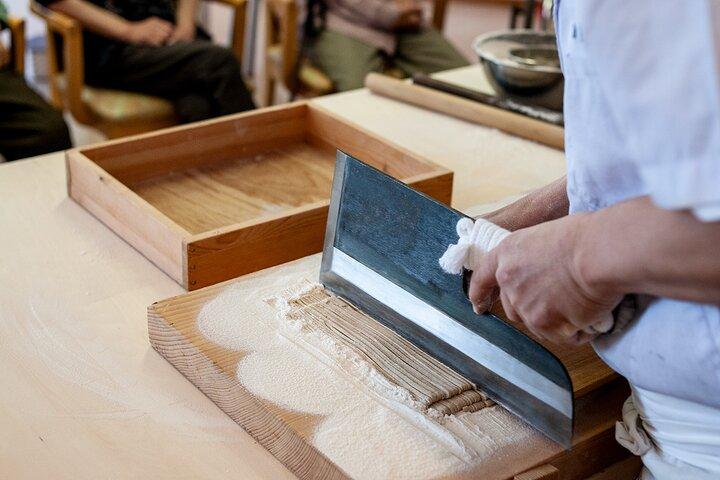
Experience Big soba knife Soba Making Class in Tokyo Kappabashi
Experience Big soba knife Soba Making Class in Tokyo Kappabashi
The soba-making classroom is bright and functional—long wooden tables, big blades resting on boards, and bowls of flour waiting for hands. The air smells faintly of buckwheat and wood, and the soundscape is all quiet instruction, dough slapping on surfaces, and occasional laughter when noodles go rogue. Light bounces off the polished metal of the oversized soba knives, making them feel both intimidating and deeply inviting.
Experience Big soba knife Soba Making Class in Tokyo Kappabashi
Step back onto Kappabashi-dori and wander a few doors down to browse knives and kitchen tools at nearby specialist shops.

Izakaya Banraisyuten
Izakaya Banraisyuten
Izakaya Banraisyuten sits just off Asakusa’s main drag, its entrance marked by warm light and noren curtains. Inside, the space is compact with a long counter and a few small tables, the air scented with grilled skewers, fried dishes, and sake. The atmosphere is friendly but not rowdy, with staff moving efficiently between regulars and visitors.
Izakaya Banraisyuten
When you’re ready for a nightcap, it’s a 5-minute walk through Kaminarimon-dori to Yamaka Sakaba.

Yamaka Sakaba
Yamaka Sakaba
Yamaka Sakaba is a modest Asakusa bar with a worn-in charm—wooden stools, a counter lined with bottles, and a softly lit interior that feels like it’s been there forever. The air smells faintly of soy, alcohol, and whatever’s on the grill, and the soundtrack is a mix of quiet conversation and low-volume radio.
Yamaka Sakaba
Step back into the cool night air and follow the lanterns toward the station, the smell of incense and grilled meat fading behind you.

Kaminari mon
Kaminari mon
Kaminari mon is the dramatic outer gate to Sensō-ji, dominated by a massive red lantern hanging over the thoroughfare. The gate’s vivid red pillars and black calligraphy pop even under grey winter skies. The area in front is a constant flow of people, camera shutters, and the low murmur of groups organizing themselves.
Kaminari mon

Neighborhoods
Feedback & Furugiya: Koenji’s Thrift Racks and Heavy Metal Lunch
Morning in Koenji sounds like shutters rolling up and the faint echo of someone sound-checking in a basement live house. You wander in from the station, breath fogging in the cold, and let the neighborhood wake around you: cafes opening, thrift stores flicking on fluorescent lights, the smell of curry and cigarettes from a back alley. The tempo today is slow and sideways—less about landmarks, more about following your nose and the squeak of hangers on metal rods. Lunch at Kouenji METAL MESHI HEAVY METAL DINING is all distortion and comfort food, a tiny room where album covers fight for wall space and cheesy beef curry arrives in cast-iron, bubbling and molten. The afternoon drifts between vintage racks at Trip Vintage Mens Koenji, MOGI Folk Art’s shelves of objects, and the quiet focus of UPTOWN RECORD STORE, where sleeves crackle under your fingers. As the light fades, you sink into a basement at Tokimeki for dinner—counter seats, soft lighting, the low murmur of people who know exactly why they’re here—before Sake bar KoKoN closes the loop with curated pours under a glass floor. Tomorrow, the energy softens again in the trees and gravel paths of Shinjuku Gyoen and Meiji Jingu.

Poleyale
Poleyale
Poleyale is a small Koenji café with a warm, slightly dim interior—wooden tables, a counter lined with cakes or small sweets, and a barista moving calmly behind the machine. The air smells of freshly pulled espresso and sugar, a comforting contrast to the crisp air outside. Conversations stay low and unhurried.
Poleyale
From Poleyale, wander 6–8 minutes toward the heart of Koenji’s shopping streets and your lunch spot.

高円寺メタルめし Kouenji METAL MESHI HEAVY METAL DINING
高円寺メタルめし Kouenji METAL MESHI HEAVY METAL DINING
Kouenji METAL MESHI feels like a tiny gig venue that happens to serve gloriously heavy food—walls covered in band posters, guitars and metal memorabilia tucked into corners. The speakers hum with riffs and drum fills, loud enough to set the mood but not drown out conversation. Plates arrive sizzling and molten, with cheese stretching in long strands and curry bubbling in cast iron.
高円寺メタルめし Kouenji METAL MESHI HEAVY METAL DINING
After lunch, roll slowly back onto the street and head 7 minutes toward Trip Vintage Mens Koenji.

Trip Vintage Mens Koenji
Trip Vintage Mens Koenji
Trip Vintage Mens Koenji feels like stepping into someone’s carefully edited closet from the 80s and 90s—Burberry trenches, old Tiffany pieces, and racks of tailored jackets under bright but flattering light. The air is faintly perfumed with fabric softener and old wool, that comforting thrift-store smell without the chaos. Hangers slide with a soft metallic scrape, and mirrors tucked between racks reflect back layered silhouettes.
Trip Vintage Mens Koenji
As the afternoon fades, walk 10 minutes toward Tokimeki, tucked into a basement space near Koenji Station.
Tokimeki
Tokimeki
Tokimeki hides in a basement off Koenji’s main drag, a low-ceilinged room washed in warm light with tightly arranged tables and a small counter. The air carries the smell of grilled fish, stock, and a bit of alcohol, with soft music filling the gaps between conversations. Plates arrive like small vignettes—carefully arranged but never fussy, colors popping against simple ceramics.
Tokimeki
From Tokimeki, it’s a 3-minute walk to Sake bar KoKoN for a considered end to the night.

Sake bar KoKoN
Sake bar KoKoN
Sake bar KoKoN sits below street level, a softly lit space with a glass floor that gives the room an almost floating feeling. Bottles line the walls like a curated gallery, labels facing out in neat rows. The air is cool and faintly sweet with the scent of rice and alcohol, and conversations stay in a low, respectful register while the bartender talks through each pour.
Sake bar KoKoN

City
Shrines, Skyline & Gyoza: Shinjuku, Harajuku and Shibuya After Dark
Today opens quieter than you’d expect from Shinjuku: the crunch of gravel underfoot in Shinjuku Gyoen, the soft rustle of winter leaves, the distant hum of the city muffled by trees. The park feels like a pause button—broad lawns, bare branches etched against the sky, and the occasional couple sharing a thermos on a bench. From there, the day threads past Meiji Jingu’s towering torii and the scent of cedar, shifting from garden calm to shrine gravity. By lunch, you’re in Harajuku’s side streets, ducking into Gyukatsu Motomura Harajuku Branch for sizzling beef cutlets that you finish on your own hot stone, the fat crackling audibly. Afternoon belongs to Shibuya’s verticality: elevator rides, escalators, and finally the open-air rooftop of Shibuya Sky, where the city stretches out in every direction like a circuit board. Dinner is a gyoza feast at Gyopao Gyoza Shinjuku, dumplings arriving in pillowy, soup-filled forms that demand focus. The night ends either in the industrial glow of THE LIVELY TOKYO AZABUJUBAN’s bar or under the orange lattice of Tokyo Tower, already teasing tomorrow’s slower, more hyperlocal Shimokitazawa.
Shinjuku Gyoen National Garden
Shinjuku Gyoen National Garden
Shinjuku Gyoen is a wide, breathing space in the middle of the city—broad lawns, ponds, and winding paths framed by trees. In December, the air is crisp, and the remaining leaves add rust and gold tones to the muted greens. The city’s towers peek over the treeline, but the dominant sounds are footsteps on gravel and the occasional rustle of birds in the branches.
Shinjuku Gyoen National Garden
Exit toward Sendagaya or Shinjuku Gate and hop a short train ride to Harajuku for Meiji Jingu.

Meiji Jingu
Meiji Jingu
Meiji Jingu sits in a pocket of forest between Harajuku and Shibuya, its gravel paths leading under towering trees and massive wooden torii gates. The air feels cooler and smells of cedar and earth, a stark contrast to the fashion and traffic just outside. At the main shrine, wooden ema plaques and sake barrel displays add texture and color to the otherwise restrained architecture.
Meiji Jingu
From the shrine, walk back toward Harajuku’s backstreets for lunch at Gyukatsu Motomura.

Gyukatsu Motomura Harajuku Branch
Gyukatsu Motomura Harajuku Branch
Gyukatsu Motomura’s Harajuku branch is small and focused, with counter and table seating arranged around personal hot stones. The room is filled with the sound of sizzling beef and the smell of toasted breadcrumbs and rendered fat. Light bounces off the metal trays and ceramic dishes, making the whole set look like a tiny, edible still life.
Gyukatsu Motomura Harajuku Branch
After lunch, ride the train a few minutes to Shibuya Station and follow the signs up to Shibuya Sky.

Shibuya Sky
Shibuya Sky
Shibuya Sky crowns a skyscraper with an open-air deck that feels more like a plaza in the sky—glass railings, wooden decking, and wind that whips your coat open. The city spreads in every direction, a grid of lights and movement, with Shibuya Crossing directly below like a living circuit board. Music plays softly, but the real soundtrack is wind and distant city noise.
Shibuya Sky
Head back down into the station maze and catch a quick train to Shinjuku for dinner.

Gyopao Gyoza Shinjuku
Gyopao Gyoza Shinjuku
Gyopao Gyoza Shinjuku is a third-floor space that feels packed with energy—tables close together, warm lighting, and the smell of gyoza and other shared plates hanging in the air. Steam escapes from bamboo baskets and sizzling platters, and the sound of chopsticks tapping and glasses clinking sets the tempo.
Gyopao Gyoza Shinjuku
Craft
Matcha, Thrift & Kintsugi: Shimokitazawa and Ginza’s Quiet Glow
The last day opens in Shimokitazawa, where the streets feel scaled to human pace—narrow, slightly crooked, overhead wires tracing lines against a pale winter sky. You start with coffee at LOOK UP COFFEE, watching thrift hunters and students drift past the window, hands tucked into pockets against the cold. Late morning is for drifting through racks at Bazzstore and TreFacStyle Shimokitazawa East Exit, fingers brushing denim, wool, and leather, the soft squeak of hangers a kind of soundtrack. Lunch at Kyushu Cuisine and Delicious Sake Dontaku Shimokitazawa Branch leans hearty and regional: grilled mackerel, chicken nanban, and sake that warms your chest. Afternoon, you sit cross-legged in a Ginza studio for the Kintsugi Workshop: Embrace Imperfections, gold lacquer glinting against broken ceramic under bright lights. By dinner, you’re back in Shimokitazawa’s underbelly at IZAKAYA RESTAURANT YAKIYASAI GINGADAN, where vegetables are treated with the reverence of main characters and the air smells of smoke and miso. The night closes upstairs at Matcha Passport, whisking frothy green under the guidance of someone who lives and breathes tea—a quiet, ritualistic end to four days of steam, stalls, and soaking in Tokyo’s subtler frequencies.

LOOK UP COFFEE
LOOK UP COFFEE
LOOK UP COFFEE is a bright little corner of Shimokitazawa, all clean lines, pale wood, and a counter humming with grinders and steam wands. The air smells of fresh espresso and matcha, with the occasional sweetness of cheesecake drifting from the display. Natural light pours through the front windows, turning the small space into a kind of neighborhood observatory.
LOOK UP COFFEE
From the café, it’s a 5–7 minute wander through narrow streets to your first round of thrift at Bazzstore.

Bazzstore
Bazzstore
Bazzstore spreads over multiple floors, each level a different chapter of secondhand style—casual streetwear, more tailored pieces, and accessories. The lighting is bright and functional, making colors pop and details easy to spot. You hear the low swish of hangers and the soft thud of shoes being tried on as people move between sections.
Bazzstore
When your arms are full or your patience is thin, walk 6 minutes to Kyushu Cuisine and Delicious Sake Dontaku Shimokitazawa Branch for lunch.

Kyushu Cuisine and Delicious Sake Dontaku Shimokitazawa Branch
Kyushu Cuisine and Delicious Sake Dontaku Shimokitazawa Branch
Dontaku’s Shimokitazawa branch wraps you in warm wood and the clink of ceramic, its interior echoing a cozy countryside izakaya more than a city restaurant. There’s a gentle hum of conversation, the air scented with grilled fish, fried chicken, and a hint of sake. Dishes arrive on wooden trays, each component arranged with quiet care—rice, pickles, mains, and sides forming their own small landscapes.
Kyushu Cuisine and Delicious Sake Dontaku Shimokitazawa Branch
After lunch, hop the train to Ginza for your kintsugi workshop at Daiwa Ginza Building.
Kintsugi Workshop: Embrace Imperfections
Kintsugi Workshop: Embrace Imperfections
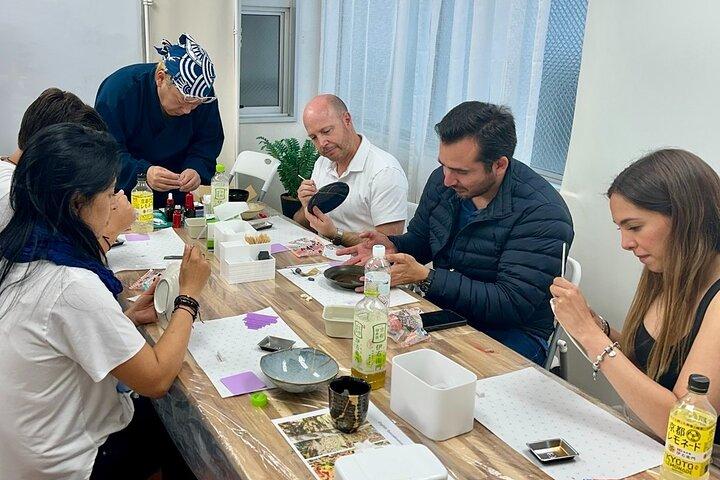
The kintsugi studio in Ginza is bright and orderly, tables laid out with broken ceramics, small brushes, and tiny pots of lacquer and gold powder. The air is clean, carrying only the faint scent of wood and adhesive. Soft instructions and the gentle scrape of brush on ceramic fill the space, creating a focused, almost meditative atmosphere.
Kintsugi Workshop: Embrace Imperfections
When the workshop wraps, ride back to Shimokitazawa for dinner at YAKIYASAI GINGADAN.

IZAKAYA RESTAURANT YAKIYASAI GINGADAN
IZAKAYA RESTAURANT YAKIYASAI GINGADAN
YAKIYASAI GINGADAN sits below street level in Shimokitazawa, glowing with warm light and a low, steady hum of conversation. The open kitchen sends out waves of smoke and the aroma of charred vegetables, butter, and miso. Plates of asparagus, mushrooms, and seasonal produce arrive glistening, edges just kissed by the grill, arranged on simple ceramics that let the colors stand out.
IZAKAYA RESTAURANT YAKIYASAI GINGADAN
Customize
Make This Trip Yours
6 more places to explore

Wabocho Gallery Mei Syou Kappabashi
On a quiet stretch of Kappabashi-dori, Wabocho Gallery Mei Syou feels almost like a shrine to steel—knives gleaming under precise, white light, their blades catching reflections from the street. The space is calm, with the soft murmur of staff and the faint metallic scent that comes from so much honed metal in one room. Wooden handles line up like a palette of browns and ambers, each piece resting on dark felt.
Try: Handle a few different gyuto knives and ask the staff to show you how each balance feels in your hand before choosing one.

Wine Bar Juni
Wine Bar Juni in Meguro glows like a small ember on a quiet street, amber light spilling onto the pavement through large windows. Inside, the bar is intimate—wooden counters, bottles lined up in thoughtful clusters, the low murmur of conversation punctuated by the clink of thin-stemmed glasses. There’s a lived-in softness to the room, from the patina on the bar to the playlists that lean more toward conversation than performance.
Try: Ask for a glass of whatever the sommelier is most excited about that week rather than defaulting to a known region.

Jesus Judas
Jesus Judas in Shimokitazawa looks like a jewel box of leather and hardware—wallets, bags, and small accessories laid out under warm spotlights. The shop is compact, with dark shelving and glass cases that make each item feel like a one-off find. There’s a faint scent of leather in the air, and the shopkeeper’s voice carries in a low, friendly register over the quiet.
Try: Handle a few of the luxury wallets or bags and ask about their stories—many are curated with a specific brand history in mind.

MIXHIVE(下北沢 ブランド古着 販売・買取)
MIXHIVE sits on a Shimokitazawa side street, its racks lined with branded vintage that feels more curated than chaotic. The interior is bright, with white walls and well-spaced displays that let each piece breathe. You catch the faint rustle of hangers and the occasional exclamation when someone unearths a particularly good find.
Try: Scan the Burberry and designer sections—this is where the best cost-per-wear treasures tend to hide.

Koenji Baka Doshi
Koenji Baka Doshi is a compact izakaya up a set of narrow stairs, its walls close and cozy, plastered with hand-written menus and small posters. The air is dense with the scent of grilled dishes, soy, and a hint of alcohol. There’s an easy, chatty energy between staff and regulars, chopsticks moving quickly over shared plates.
Try: Try the tamagoyaki and one of their richer dishes, like the foie gras with ikura risotto, to see the full range.

Matcha Passport
Matcha Passport is tucked on a second floor in Shimokitazawa, part tea studio, part intimate bar. Inside, the lights are low and warm, the counter laid with bowls, bamboo whisks, and tins of vivid green powder from different regions. The sound of whisking—soft, rhythmic—layers over gentle conversation and a relaxed playlist.
Try: Book or request a guided tasting flight of matcha from different regions to feel the nuances side by side.
Before You Go
Essential Intel
Everything you need to know for a smooth trip
What is the best time to visit Tokyo for this itinerary?
How do I get around Tokyo efficiently?
Are the markets open in December?
What should I pack for a winter trip to Tokyo?
What cultural etiquette should I be aware of?
How do I experience local culture in Tokyo?
Are there any specific markets I should visit?
What is the budget for a 4-day trip focusing on local culture and markets?
Is it necessary to book market tours in advance?
What is the best way to experience Tokyo's food culture?
Coming Soon
Build Your Own Trip
Create your own personalized itinerary with our AI travel agent. Join the waitlist.